Wednesday, January 28, 2009

The heatwave we had to have

image

It was the week we had been dreading. After a comfortably mild December and early January, the inevitable heat wave was finally coming our way.

And it is going to be a killer. Five days straight of 40-degree heat. Perhaps it’s payment for the overdue hot days we missed so far. Plus the inexorable path of global warming. For a few cool days it seemed that all was pleasant in the world.

And then, on the first of the days, a gentle southerly breeze tempered the heat. Around midday, the temperature suddenly dropped and it seemed that perhaps we could escape the worst. Perhaps a butterfly sneezed in Beijing, and the high that has settled over Tasmania has quickly moved on.

But the northerlies eventually prevailed. If anything, the forecast now has got worst. It is going to be 43 degrees on Thursday.

After the collapse of Wall Street last year, the Australian government introduced a stimulus package to stave off recession. For a while, in December, it seemed that we would escape the worst. Extra dollars poured into shops for Christmas and there was plenty of fruit on the trees. It even rained.

And then there was the Obama inauguration, when the world seemed unified in a vision of hope. A passenger jet landed on the calm waters of the Hudson river. Obama started his mission ‘faithfully’. Jelena Dokic re-emerged from nowhere to win hearts at tennis.

But as the year rolls on, the newspapers are filled with more bad news and commentators are warning that with the downturn in China Australia will not escape economic hardship.

Things will get worse before they get better.

Last night Dokic lost.

It’s enough to make you a Stoic.

Saturday, January 10, 2009

Mandatory Europeanism

image

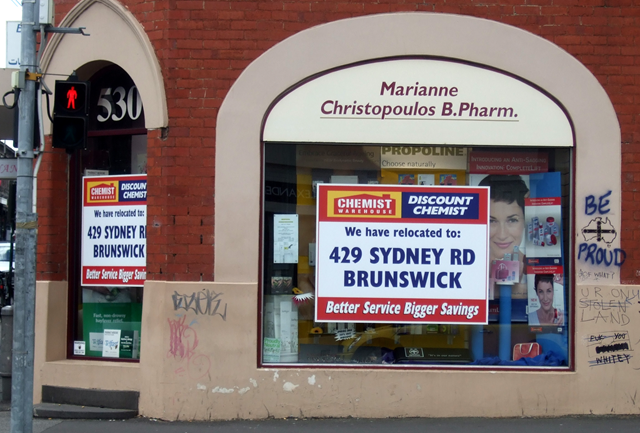
The chemist occupies a special place in a neighbourhood. The pharmacist claims a strangely intimate relation to the client. We entrust the man or woman in the white coat with the embarrassing details or our ailments, and niggling concerns about skin conditions and less savoury things. They help us in maintaining the armoury of public life.

Late last year, someone came into our chemist with an offer that was hard to refuse. He was about to open a branch of the super-chain Chemist Warehouse around the corner. ‘You can either sell us your business now, or you will go broke, as there’s no way you can match our prices.’ So they sold.

In its place is a chemist supermarket. The windows are plastered with crazy offers – I it looks cheap and nasty, people will think they are getting a bargain. Inside, it looks like any tacky supermarket, with aisles groaning with remaindered goods.

I decided I had to come and confront these demons soon after they were open, to give them a chance to win me over. Perhaps they are doing a social service, offering medical goods at a price that poor people could afford. No, instead the young man behind the counter sympathised with my position, and could see that it was a loss of neighbourhood. But, he said, ‘That’s what they are doing in Europe now, so, well…’

That’s certainly something to touch the sensitive republican nerve. So it’s done in Europe. Ok, I guess you’re right. Let’s give up on our local values, as if it is happening in Europe now, then it’s inevitable that will be happen here too. Resistance is futile.

This is our international European designer brand mentality, consigning us to the rubbish bin of history at the bottom of the world.

Or is it?

Saturday, December 27, 2008

Is this your Australian dreaming?

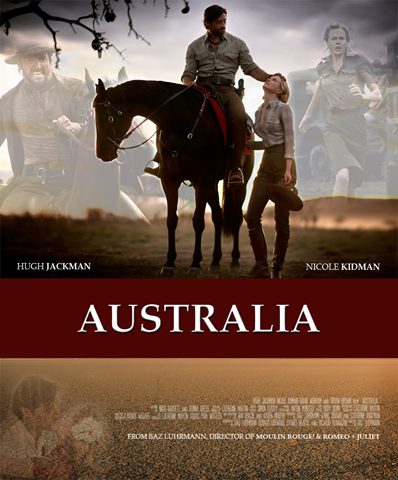
imageI spend most of my during Australia trying to counter my instinct to deconstruct its mythification. It seemed too easy to criticise the way it glossed over reality. Australia is, after all, an entertainment constructed to enchant the great southern land for a new generation. But there were two moments that left me feeling quite uneasy about the Australia that it constructed, particularly for a non-indigenous audience.

The plot of the film revolved largely around the plight of a young half-caste boy, Nulla. To a large degree, this was was the exclusive point of engagement with Aboriginal Australia. As such, it was a profoundly unequal relationship. While Nulla has a little magic at his disposal, he still needed the heroism of the Drover to save his life. The only reciprocal adult relationship was between the Drover and his ex-wife's brother, who taunted him that he didn't belong in this land. But the brother-in-law was removed from the plot, killed while valiantly defending the mission boys.

If I was a Freudian looking for an uncanny moment around while the film unravelled, then I would probably look to the scene when the Drover took charge of his promised stead, Capricornia. This horse differed from others primarily by its colour - jet black. The scene depicts the Drover manfully taming the wild energy of the horse, bringing it under his control and making it part of the business of the farm. It seems emblematic of what the film as a whole does, in subjugating the politically difficult indigenous cultures of Australia into a directorial spectacle. Why such a black horse? Why the absence of black men in the Australia that remained?

The second scene was at the very end. At first, I was relieved that Nulla was allowed to go walkabout with his grandfather. But the final words -- as I can remember them -- were along the lines of 'we are part of the same country, but you have your dreaming and I have mine.' So what did the film suggest was 'our' dreaming?

The overt non-indigenous myth in the film was the Wizard of Oz, which Nulla cleverly was able to elicit as a source of dreaming in the stiff English aristocrat. This choice of film was partly word play - on 'Oz' as the land of Australia and 'Somewhere over the Rainbow' as a reference to the rainbow serpent dreaming. But the Oz story itself reflected American cinema as a factory of dreams. As a product of this factory, Australia seemed more closely modelled on the American western than the tradition of local cinema. It had none of the eccentricity of the great Australian films of the 1970s. It was great to see an actor like Bruce Spence again, but he was left with a thinly stereotyped role, especially compared to the captivating appearance in Mad Max.

Apart from Hollywood as our dreamtime, the other major non-indigenous story was about the cattle industry. Surely at a time when we are more aware of the serious environmental degradation due to beef production, this seems hardly a pursuit on which to model Australia.

Maybe Australia is the last fruit of our spectacle culture. As financial realities knock down the economic house of cards, perhaps a new cinema will emerge to explore the cracks in the façade. After all, that's closer to home.

Friday, December 26, 2008

Gracias

image

Kevin Rudd reflecting on his encounter with the Sisters of Mercy mission helping indigenous Peruvians

Thank-you for advancing the task of global reconciliation between settled communities, settler communities and indigenous communities around the world.

'Remarks at Launch of the National Australia Bank Reconciliation Action Plan' Parliament House Canberra'   (1/12/2008)

The Tucumán connection

un amigo es como un hermano pero mejor, porque no heredás su ropa
Originally uploaded by quino para los amigos

We hear that the Queensland race relations policy was the inspiration for South African apartheid legislation. Here's another unfortunate southern connection.

The story of the cultural intervention of the sugar industry in the Calchaquí valley plays out as a perfect metaphor of the white Argentina myth. In Congress, Deputy Padilla and fellow Tucumán representative Juan Simón Padrós fought to obtain a legal recognition of the sugar industry as a “white industry.” This unusual label had nothing to do with the color of the product but with the ethnicity of the workers who toiled in fields and mills. Padilla and Padrós invoked the example of Australia, which in 1914 included the sugar industry under the “White Australia Act,” banning Aboriginal and Melanesian workers and receiving in compensation protective tariffs against cheap Javanese sugar. Argentines wanted similar protection against Cuban and Brazilian sugar, which, according to the industrialists’ twisted explanation, competed favorably with Tucumán sugar because of the exploitation of “inferior races.”86 Tucumán industrialists claimed to be forced to hire only white criollo workers, “whose higher living standards could not be compared to the colored workers of Java, Hawaii, etc.” The industrialists took pride in providing jobs for the large criollo population of the northwest but demanded a protective tariff in recognition of their patriotic commitment.

Oscar Chamosa 'Indigenous or Criollo: The Myth of White Argentina in Tucumán’s Calchaquí Valley' Hispanic American Historical Review 2008, 88: 1, pp. 71-106, p. 100

Tuesday, November 18, 2008

'From out part of the world...'

In Kevin Rudd's friendly chat about what's been happening at the G20 Summit, note how he opens his address, talking about the nations that were present. He talks about the 'US, other major economies around the world, and a lot from our part of the world as well...'

How refreshing to hear Australia linked to its neighbours. Is a subtle move away from the old idea of 'deputy sheriff', being the proxy for the more powerful countries in the distant north.

Sunday, August 24, 2008

Farewell to post-colonialism

The third Guangzhou Triennial is just about to open with a theme 'farewell to post-colonialism'. It is interesting to see their take on this. From the introduction:

For some years major international contemporary exhibitions around the world have worked towards building up ‘discursive sites for a cacophony of voices’ and ‘negotiated spaces of diverse values’, emphasising ‘correctness’ in cultural politics; these have inadvertently triumphed to the neglect of independent pursuit of artistic creativity and alternative imaginative worlds. Concepts of identity, multiplicity and difference are now slowly losing their edge to become new restrictions for artistic practice, succumbing to the phenomena of ‘false representation’ and ‘multi-cultural managerialism’.

It will be interesting to see if this is a departure from politics itself, towards what appears to be a large movement towards enchantment - the power of art not to change the world but to provide relief from it.

An alternative farewell to post-colonialism reflects the changing world order with previous victims of Western imperialism, like India and China, now aspiring to be active agents in the world order themselves. Perhaps this is part of it. Perhaps it doesn't need to be said.

Tuesday, July 29, 2008

Two sides of the Pacific

DSCN9023

Offered for exclusive tastes in Santiago is high class Australian meat cuisine.

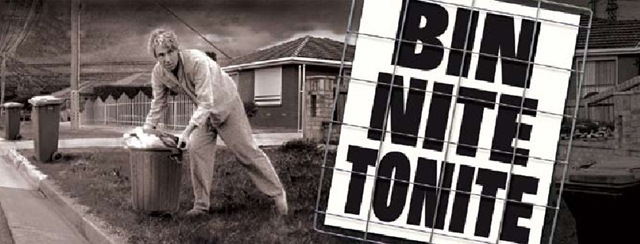
Bin night

Meanwhile, Melbourne artist Peter Burke is filling Altona billboards with the real drama on the streets of this southern city.

Dark clouds not on the horizon

DSCF3964

Within the liberal classes, we have become so used to our own sense of tolerance and cosmopolitanism, we may be blind to the danger of complacent insularity from within.

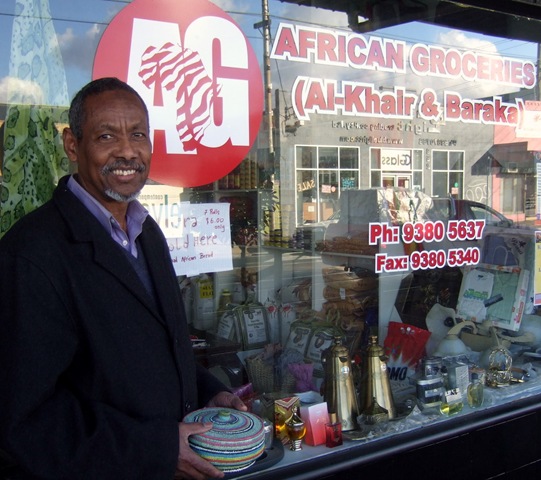
The People's Republic of Brunswick is a widely celebrated bastion of multiculturalism. After Italian, Greek and Arab, the latest region to add its culture to the suburb's diversity is African. In Lygon Street is the new store with goods and crafts from east Africa. Mahmoud Leman is here holding a bowl made by local Eritreans from recycled materials. His wife Halima Sheikhdin has been particularly involved in this activity.

I visited this store on my way to a 'town hall' meeting at the East Brunswick Hotel where a panel was discussing the latest plan for development in Brunswick. The hotel was packed to the gills with locals keenly interested to ensure that their suburb was protected from threats from outside. One of the proposals considered was a ring road to direct cars away from Brunswick.

Looking around at the crowd, it was hard to find anyone - including myself - who was not Anglo middle class. There were no Greeks or Africans present. While seeming noble in motive, reflecting a shared consensus in 'green' values, I couldn't repress a feeling of apprehension that this is a kind of middle class gentility whose hidden purpose is to ensure homogeneity. It's a terrible thought, which I attribute to some devil whispering in my ear. But I await the voice of the angel to dispute this.

And last night, I went to the surprise lecture of the next director of the Sydney Biennale, David Elliot. While celebrating 'impurity' in art, he actually contextualised this within the consciousness of the artist, rather than a critical engagement with impurity as we have seen in psychoanalysis or postcolonialism. The sense was that the free bohemian artist was above the crude divisions that exist in the world. This disengagement of art from the world (suggested partly in this year's Biennale) does not bode well for responses to climate change. Will re-localisation prove to create comfort zones for well-endowed elites?

Well, someone has to ask the question, if only to be proved wrong.

Sunday, July 27, 2008

Gubbaworld

DSCF3948

At Melbourne's Platform gallery is a curious exhibition for us commuters to reflect on our lack of belonging to the land.

Here's how Sharon West explains Gubbaworld:

Presenting colonial pseudo-histories and other follies
Gubbaworld is derived from the Koori name for white people. This exhibition parodies the notion of the museum diorama cabinet, offering pseudo narratives of Victorian settler history and draws reference on the Indigenous dioramas of Melbourne Museum and the Great Colonial Exhibitions of the late 1800s. The work themes also focus on settler and Indigenous contact, exploring parables and inversions that satirise the ideas of the great Southern land, the Noble Savage and white colonisation.

It's a humorous take on the naïve settler romance about native peoples. There's some reversals, as in the piece below, which put Koori's in the place of cultural tourists.

The effect of this exhibition is for us to laugh at the outmoded colonial movements, such as Jindyworabaks, who essentialised Indigenous cultures. But it does raise the question of where this places us today. Is the now official acknowledgement of Indigenous custodianship enough? Where do non-Indigenous now place themselves in this scene today?

DSCF3953A new Jerusalem
An attempt in the transplantation of British culture onto the Indigenous landscape. The Koori campsite is remodelled into a pleasant English village

Thursday, July 10, 2008

We're in, they're out

image

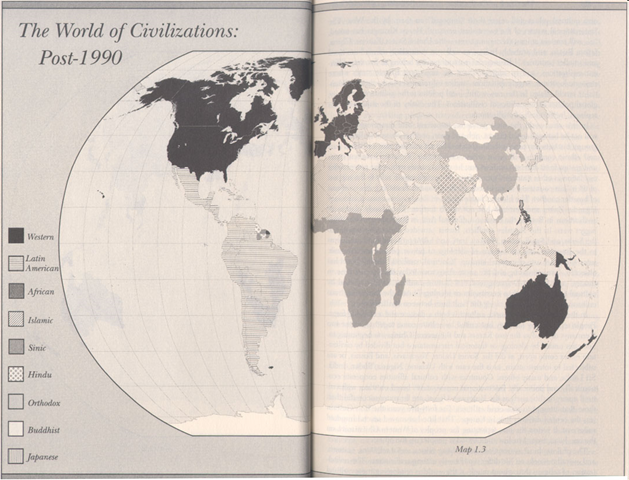
The Occidental is, primarily, the place of hegemonic epistemology rather than a geographical sector on the map. Samuel Huntington demonstrated as much when he placed Australia in the First World and in the West while leaving Latin America out.

Walter Mignolo The Idea of Latin America Oxford: Blackwell, 2005, p. 37

Wednesday, July 09, 2008

Two leaders of the South

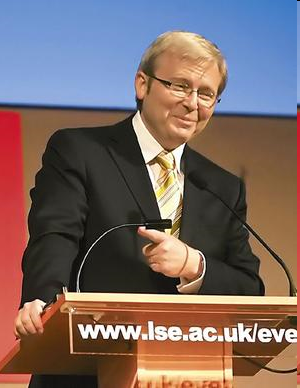
Recently two leaders of southern nations have delivered lectures at the London School of Economics. Though both coming from ex-colonised on the other side of the world, and representing fresh democratic energies, they had very different stories to tell.

image The Australian Prime Minister Kevin Rudd started his address on 7 April with jokes about the Australian superiority in cricket. His 'colonial strut' reflected a young boisterous nation goading its slow-moving but beloved parent. The speech was an opportunity to outline Britain's relation to the aspiration that Australia be the 'most Asia-literate nation in the collective West.' He made an emphatic point that:

Today I want to argue that, in a rapidly changing world, Australia and the United Kingdom have a lot to gain from working with each other to shape the emerging global order – particularly given Britain’s strength in Europe and Australia’s standing in Asia.

So here is the arrangement of the two close Anglo nations within the collective West. Britain looks after Europe, and Australia looks after Asia. The assumption is that the collective West is the principle actor on the world stage, steering history on a safe course. No doubt this assumption will be seriously challenged in future years.

image Three days before, the Chilean President Michelle Bachelet addressed the LSE about the situation in her country. It began as a very serious talk, emphasising issues of statecraft and the role of the government in transcending competing interests between different groups. While a little dry, she had some interesting things to say about the challenge to confront the culture of political belligerence and create a civic discourse in which opposing points of view can debate calmly. Towards the end, she started to make some jokes in a way far more spontaneous than Rudd. There was no reference to Britain whatsoever in her talk.

As she left he podium, Bachelet was presented with a cup similar to that given to Nelson Mandela. As another leader of the South, was Rudd given a similar gift?

Sunday, July 06, 2008

Betancourt's release - it's not all good news

image

So after six years in jungle captivity, Ingrid Betancourt is finally released. Certainly, one can only share the joy of her release, the relief of a painless rescue and the ecstasy of a family re-united.

But there's also case for some regret. One of Betancourt's first acts on release is to fly to France and express her appreciation for the support of the French people, particularly the President, Nicolas Sarkosy. 'I owe my life to France', she says.

It seems a strange statement for her to make. France apparently had no role in the rescue operation. It was the Colombians who risked their lives for her.

The immediate flight to France, where she has begun to give details of the horrors of the Colombian jungle, can only confirm the belief in most first world counties of the lawlessness and barbarity of the South.

There are many references in the story of her rescue to a Hollywood script. It's as though she was saved not by real soldiers but by Stephen Spielberg. The way the story has been told is testimony to the cultural hegemony of the West, and the fantasy of world redemption that is enacted in US action films.

So, despite the joy of Betancourt's reunion with family and friends, I feel a twinge of regret that this episode only confirms the hierarchy of North and South - the powerful, civilised force of the North, pitted against the disorganised, barbaric forces of the South.

It reaffirms the aspirational perspective of the South, where the lucky few who are able to escape are lauded as great national heroes.

None of this counters the pleasure in Betancourt's release. I just wish she would have stayed in Colombia.

Monday, June 23, 2008

The Zimbabwe issue

The incessant stories of corruption, violence and ineptitude from the current Zimbabwe government make it impossible to consider that their position is based on anything other than self-interest.

But there's always another point of view. Where would it be? Try listening to the BBC interview with the Zimbabwe information minister Ndlovu. At one point, the interview hectors the minister 'Well, it's practice in our country to asks questions of the politicians!' The tone was so redolent of imperialism, you could understand how the present government is able to sustain its belief that the colonials are still a threat.

There may be many more stories about Zimbabwe that we never get to hear. It makes you wonder if the news blockade is not so much about information getting into Zimbabwe as anything other than the story of chaos emerging from Zimbabwe itself.

Friday, June 20, 2008

Our Other Hemisphere

Below is the original of a slightly edited article for The Age:

Kevin Rudd has spent the last week heralding an Asian century. Now he has returned back to Australian soil, it’s timely to open up Rudd’s narrative to scrutiny. There are some big questions yet to be asked.

Rudd claims that ‘Australia has to make itself the most Asia-literate country in the collective West'. Debate so far has focused on becoming more engaged with the Asian region. But this misses the wood for the trees. There’s a larger assumption in Rudd’s statement that has so far escaped our attention.

‘Collective West’?

Curious, isn’t it, for a country in the South-East end of the world to be part of the West. It’s more politics than geography. The ‘collective West’ is a natural complement to the earlier grouping, the ‘Global South’, which includes countries in the geographical North such as China and India. Our position inside this ‘collective West’, yet located South, should prompt more discussion than it does.

The 'collective West' is conjured today in a number of ways. Positively, it is the bastion of liberal values, promoting democracy, religious tolerance and individual freedom. Defensively, it is the target of resentment by those on its fringes, such as Islamic fundamentalists and ex-communists. Conservative commentator Victor Hansen describes the ‘collective West’ as a ‘wandering Odysseus’ encountering monsters at every turn. It is an epic of progress that we share with the first rank of nations.

But the phrase has a particular meaning to Kevin Rudd. In his 2005 address to University of New South Wales, Rudd described how Christianity has been displaced from its once privileged position at the centre of the 'collective West' to its current status as a marginal faith, returning to its origins.

This concept of a minority belief sets up Australia’s position as a marginal but friendly force within the wider Asian context. Rudd used his Indonesian visit to call for an interfaith dialogue to explore common values of Christian and Muslim societies. Rudd’s ‘collective West’ is no crusading power, seeking to bring the world under its dominion. It can be a key player in someone else’s game.

So why should one of its lesser powers, Australia, be granted this privileged position in Asia? Geographic location seems an obvious advantage, but it is quicker to fly to Beijing from London than Sydney. More likely it is our shared time zones and—as a younger nation—our capacity to adapt to Asian values.

And why should we want this position? For a politician, Asia brings home the bacon. We hope to ride the Asian tiger, feeding its hunger for development with our minerals and degrees. But what does this say about our identity as a nation? Are we anything more than regional opportunists?

The ‘collective West’ ennobles our ambitions. It is heartening to be part of a bigger team. In colonial times, Australia was the 'last outpost of the British empire'. During the war on terror, we proudly wore the badge of ‘Deputy Sheriff’.

Australia lost the first position when Britain joined the European Union. Our position of deputy is now endangered by the emergence of a new Sheriff, China. Rather than continue to be left out of the main game, Rudd offers the hope that we can be at the centre of our own regional grouping, an Asia Pacific Union.

But it’s only one side of the story. Rudd talks about the need for a spirit of cooperation in ‘our hemisphere’. Let’s not forget our other hemisphere. That mysterious title ‘Great Southern Land’ has traditionally identified Australia with the antipodes. Despite these romantic images, we maintain a blinkered vision, only looking north.

We tend to see ourselves alone in the South. Our common boast is to possess the 'biggest in the Southern Hemisphere,’ which can apply to anything from Highland Gatherings to car parks. This South is a kind of B League where we can excel, knowing we would be thrashed in the Premiership Division.

But Australia is not alone in this aspiration. When you look on the Internet, you find that Brazil, the China of the South, has twice as many claims to this distinction as Australia. Our ‘big pond’ mentality blinds us to those across our own latitude.

What about the view to our east, with the emerging economies and creative talents of Latin America? Or to our west, with the trade in our other ‘big pond’, the Indian Ocean? With strengthening democracy and economic growth averaging 5%, the South is a region waiting for our attention.

We have more in common that we realise. It’s with the South that we share the irony of a summer Christmas, imagining we’re in the North Pole while it’s 40 degrees outside. Australia is just one of many Southern countries increasingly dependent on China’s hunger for our resources. And we share the challenge of talent drain, as our best and brightest are lured to the prizes of the North. Aspirationalism alone doesn’t change that fundamental global asymmetry. We need to re-imagine what it means to live in the South.

Regardless of continental shift and rising water levels, we’re likely to remain in the South. We will continue to dwell in that half of the world which the West once chose as its collective mine, farm and prison. We share with other countries in this region a common legacy of repression and similar hopes of reconciliation.

There’s no doubt that our main bets will be placed with Asia, at least for economic reasons. However, we need to complement this northern push with an increased engagement across our South. Finding a place among our southern cousins is just as much part of our journey as doing business in Asia.

As Nelson Mandela says, ‘True reconciliation does not consist in merely forgetting the past.’ Nor should progress consist in forgetting where you are now.

Tuesday, June 17, 2008

The Empire Fights Back at the Empire Writes Back

image Tonight a voice of the new confident India emerged out of the ashes of postcolonialism. The Centre for Postcolonial Writing at Monash University hosted a forum at the State Library with a keynote address by Professor Harish Trivedi on the subject 'An Alternative Postcolonial: Language, Location and Culture'.

His address seemed aimed squarely at one of the panelists, Bill Ashcroft, who thirty years ago is credited with inventing the term 'postcolonial' in the seminal publication The Empire Writes Back. Trivedi's point was the colonialism was a mere 'blip' in India's history and postcolonialism is an anglo-centric discourse which ignores the rich precolonial and contemporary literature in languages like Hindi. He claimed that the field ignores the critical difference between white settler societies like Australia and brown cultures like India.

As an address, it was tendentious and arrogant. But Trivedi did expose an issue within the framework of postcolonial. His insistence points to the need for an academic discourse that can encompass what is loosely called 'world literature', which includes but goes beyond the colonial experience.

The challenge he is to find the critical language to analyse this corpus. For Trivedi, this seemed about the tensions between nationalities and globalisation.

It was wonderful to find a forum where a voice like Trivedi's could be expressed, though how Australian academic institutions respond to this challenge remains to be seen.

Monday, June 16, 2008

From Guam to Brisbane

It's great to see dialogue between Australia and lesser-known communities in the Pacific:

Attend the Public Forum: The Hidden War in the Pacific & Community Dinner
For over 60 years, the United States has held the people of Guam hostage to its military ambitions – US bases cover one third of the total land area of the small Pacific island and there are plans to expand the bases and flood Guam with upwards of 50,000 military personnel and their dependents. The indigenous people of Guam, the Chamoru, have waged a long struggle to protect their land and culture from the effects of militiarisation and colonisation.
Two representatives of the Chamoru people will be in Brisbane to discuss and to build support for their struggle, to strengthen links between the peace movement in Australia and the people of Guam, and to increase awareness and understanding of the role Australia is playing in the militarisation of the Pacific.
Both the special guest speakers at the public forum represented the Chamoru people at the Seventh Session of the United Nations Permanent Forum on Indigenous Issues in New York in April 2008.
Saturday June 28. BBQ: 1pm. Public meeting: 2pm
St Mary’s Church, cnr Peel & Merivale Sts, Sth Brisbane
Community Dinner (Potluck) to welcome both Chamoru activists and Darumbal elders to Brisbane.
Thursday June 26, 6pm at St Mary’s Church house. Please bring something to share.

Sunday, June 01, 2008

Winter in the South

DSCF3864

Winter begins in the South...

  • Australians read extraordinary news that 'normal rainfall' predicted for this winter.
  • Australian Opposition leader berates the Prime Minister to understand the serious consequences of the variance in petrol prices, which make the difference between whether the family will eat 'processed sausage or chops' that night.
  • The Australian art world tries to take the high ground in response to charges of obscenity, but find it now highly contested territory.
  • In Santiago, Chile, water supplies are cut after 'too much rain'.
  • News of riots in Johannesburg confirms old prejudices about South Africa.
  • No news of the millions of acts of daily kindness that sustain the complex web of ethnic differences in the 'rainbow nation'
  • We look for our favourite old scarf, down South.

Friday, May 02, 2008

A tale of two slaves

Recent time spent in Chile has prompted some thoughts about its position in relation to Australia. So what does it mean that Australia speaks the same language as the masters of globalisation, England and USA? Does this give Australia a privileged status in the South, or prevent it recognising its shared marginality with countries like Argentina or Chile?

One way of thinking about this is to imagine the scenario of two slaves:

There were two slaves, John and Juan. John is the descendent of a local family who had been slaves for many generations. Juan was captured during a raid on a foreign country and purchased in a local slave market.

While John and Juan were both equally good with their hands, they were quite different in important ways. Juan was by far the more handsome of the two. Having once been a freeman, Latin slave had elegant manners and style. However, Juan still had trouble understanding English and always felt a foreigner. Being an Englishman himself, John was much more confident, despite his crude manners.

Their master, Mr Bull, was a merchant with a thriving business selling and buying spices from overseas colonies. He was blessed with a beautiful daughter, Mary, who was the object of devotion by many young men in the town. Mr Bull and his daughter were callous towards their two slaves. They enjoyed throwing them bones at mealtime and laughed heartily as John and Juan scrambled after the scraps of food.

Both John and Juan were captivated by the beauty of the daughter. John even fantasised that one day he would be freed and could marry Mary. Any attention from Mary, even if was abusive, was taken as a sign of affection by John. ‘Get me a bag of cinnamon, boy’ she would shout, and he would feel honoured to be singled out for this important mission.

For Juan it was a different story. While he could well appreciate the beauty of Mary, he had no delusions that a day would come when he could ever win her heart, or gain acceptance in the Bull family. He knew he didn’t belong. Instead, he would content himself with the occasional small theft of food or wine. Sometimes he would be caught and whipped harshly. But he grew more clever and deceitful.

So the two slaves sit together in the evening, chewing on what bones were left for them. John says, ‘Hey Juan, you dirty Latin thief, pity you’re not smart enough to respect the ways of the Bulls and avoid the lash.’ Juan knew enough English to understand the meaning of these words. But rather than answer directly, he would dwell in his resentment, ‘You think you’re so special, being English. But in the end, we’re both scum in the eyes of the Bulls. At least I can see that.’

So John and Juan endure their bondage, divided from each other as much as from their masters. It’s a shame. Perhaps if they worked together they could collaborate on an escape—John’s understanding of the master tongue combined with Juan’s guile.

Can Matilda learn to tango?

Monday, March 31, 2008

Tale of two cities

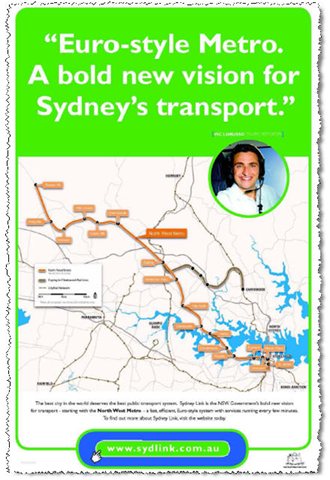
image In New South Wales, commuters are being asked to imagine a 'Euro-style Metro' as the future horizon for Sydney's troubled transport system. 'Euro' here signifies a system which is slick, clean, efficient.
While in Melbourne, The Age newspaper tried to publicise the transport woes with the image of the new train system in Delhi, India. It says:

AS MELBOURNE tinkers with its largely pre-World War II public transport system and puts up with congested roads, commuters in the Indian capital, New Delhi, are revelling in a state-of-the-art Metro

So what's it going to be? Euro or Indian? While Euro might be more familiar, I think there's more to learn on the train to Delhi.