Below is the original of a slightly edited article for The Age:
Kevin Rudd has spent the last week heralding an Asian century. Now he has returned back to Australian soil, it’s timely to open up Rudd’s narrative to scrutiny. There are some big questions yet to be asked.
Rudd claims that ‘Australia has to make itself the most Asia-literate country in the collective West'. Debate so far has focused on becoming more engaged with the Asian region. But this misses the wood for the trees. There’s a larger assumption in Rudd’s statement that has so far escaped our attention.
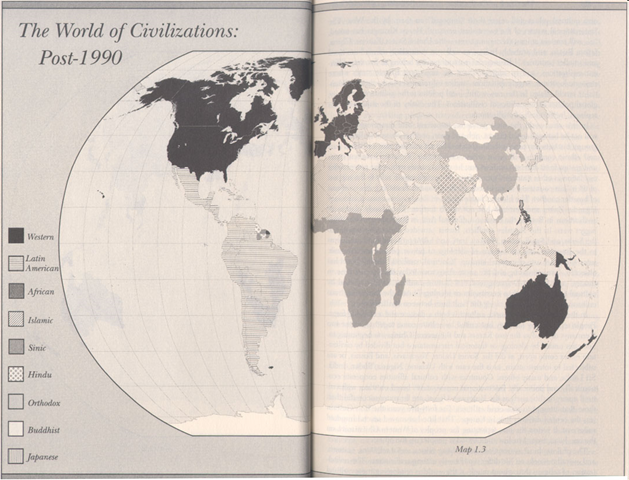
‘Collective West’?
Curious, isn’t it, for a country in the South-East end of the world to be part of the West. It’s more politics than geography. The ‘collective West’ is a natural complement to the earlier grouping, the ‘Global South’, which includes countries in the geographical North such as China and India. Our position inside this ‘collective West’, yet located South, should prompt more discussion than it does.
The 'collective West' is conjured today in a number of ways. Positively, it is the bastion of liberal values, promoting democracy, religious tolerance and individual freedom. Defensively, it is the target of resentment by those on its fringes, such as Islamic fundamentalists and ex-communists. Conservative commentator Victor Hansen describes the ‘collective West’ as a ‘wandering Odysseus’ encountering monsters at every turn. It is an epic of progress that we share with the first rank of nations.
But the phrase has a particular meaning to Kevin Rudd. In his 2005 address to University of New South Wales, Rudd described how Christianity has been displaced from its once privileged position at the centre of the 'collective West' to its current status as a marginal faith, returning to its origins.
This concept of a minority belief sets up Australia’s position as a marginal but friendly force within the wider Asian context. Rudd used his Indonesian visit to call for an interfaith dialogue to explore common values of Christian and Muslim societies. Rudd’s ‘collective West’ is no crusading power, seeking to bring the world under its dominion. It can be a key player in someone else’s game.
So why should one of its lesser powers, Australia, be granted this privileged position in Asia? Geographic location seems an obvious advantage, but it is quicker to fly to Beijing from London than Sydney. More likely it is our shared time zones and—as a younger nation—our capacity to adapt to Asian values.
And why should we want this position? For a politician, Asia brings home the bacon. We hope to ride the Asian tiger, feeding its hunger for development with our minerals and degrees. But what does this say about our identity as a nation? Are we anything more than regional opportunists?
The ‘collective West’ ennobles our ambitions. It is heartening to be part of a bigger team. In colonial times, Australia was the 'last outpost of the British empire'. During the war on terror, we proudly wore the badge of ‘Deputy Sheriff’.
Australia lost the first position when Britain joined the European Union. Our position of deputy is now endangered by the emergence of a new Sheriff, China. Rather than continue to be left out of the main game, Rudd offers the hope that we can be at the centre of our own regional grouping, an Asia Pacific Union.
But it’s only one side of the story. Rudd talks about the need for a spirit of cooperation in ‘our hemisphere’. Let’s not forget our other hemisphere. That mysterious title ‘Great Southern Land’ has traditionally identified Australia with the antipodes. Despite these romantic images, we maintain a blinkered vision, only looking north.
We tend to see ourselves alone in the South. Our common boast is to possess the 'biggest in the Southern Hemisphere,’ which can apply to anything from Highland Gatherings to car parks. This South is a kind of B League where we can excel, knowing we would be thrashed in the Premiership Division.
But Australia is not alone in this aspiration. When you look on the Internet, you find that Brazil, the China of the South, has twice as many claims to this distinction as Australia. Our ‘big pond’ mentality blinds us to those across our own latitude.
What about the view to our east, with the emerging economies and creative talents of Latin America? Or to our west, with the trade in our other ‘big pond’, the Indian Ocean? With strengthening democracy and economic growth averaging 5%, the South is a region waiting for our attention.
We have more in common that we realise. It’s with the South that we share the irony of a summer Christmas, imagining we’re in the North Pole while it’s 40 degrees outside. Australia is just one of many Southern countries increasingly dependent on China’s hunger for our resources. And we share the challenge of talent drain, as our best and brightest are lured to the prizes of the North. Aspirationalism alone doesn’t change that fundamental global asymmetry. We need to re-imagine what it means to live in the South.
Regardless of continental shift and rising water levels, we’re likely to remain in the South. We will continue to dwell in that half of the world which the West once chose as its collective mine, farm and prison. We share with other countries in this region a common legacy of repression and similar hopes of reconciliation.
There’s no doubt that our main bets will be placed with Asia, at least for economic reasons. However, we need to complement this northern push with an increased engagement across our South. Finding a place among our southern cousins is just as much part of our journey as doing business in Asia.
As Nelson Mandela says, ‘True reconciliation does not consist in merely forgetting the past.’ Nor should progress consist in forgetting where you are now.