I recently reviewed the volume What if: Australia as it Might have Been for ABC Radio National Book Show. You can find the 'full' transcript, here.
Thursday, March 29, 2007


Monday, March 12, 2007
Australians are hard to digest
John Gimlette's At The Tomb of The Inflatable Pig: Travels Through Paraguay is the most recent book on Paraguay that I have consumed. At first I thought it was sensationalist, but I am very impressed with this scholarship. The Paraguay that emerges from his book is a country that has been the subject of utopian fantasies from all corners of the earth -- usually with tragic results.

My encounter with Murray should not have troubled me as much as it did. Father Feehan had warned me: 'People here don't have the warmth of other Paraguayans. There is not that sense of belonging.' I thought about this as I made my way back through the square. It was planted with silky oaks, brought from Australia with the first settlers. There was a plaque to the villagers who'd perished in the war against Bolivia: Drakeford, Jones, King, Shepperson and Douglas Kennedy. Dying for Paraguay was, I supposed, only part of belonging to it. The Australians had obviously proved rather harder to digest than the Japanese.
John Gimlette At The Tomb of The Inflatable Pig: Travels Through Paraguay New York: Vintage, 2003, p. 228
Monday, February 05, 2007
A Black week
This has not been a good week for tolerance. Not that there has been any overt violence against others, like in the Cronulla riots, but that material has been gathered to make it more difficult for people who are different from the mainstream, particularly in colour.
The Sudanese man Hakeem Hakeem was sentenced to 24 years this week for serious offences against three women. This has prompted the Federal government minister Kevin Andrews to consider limiting intake from the Horn of Africa. I was in the court when Hakeem was sentenced and met his father, who attends the same Catholic Church as my father. Hakeem's crimes do seem heinious and inexcusable, but he has a punishment to fit that. With the little I know of the family, I can merely guess what a shock it is to move from the chaos of civil war in Sudan to the eerily quiet security of Melbourne. You would hope that as a community we could see their problems as our problems, rather than an alien infiltration.
Then there was the Geoff Clark case. And last night I saw Fox Studios Last King of Africa, which reinforces every prejudice you might have about black African men. It's not that it is inaccurate in its portrayal about Idi Amin, but that it leaves with the audience with virtually no knowledge of the culture of Uganda, it only confirms the suspicion that white people have to be wary of their black neighbours.
A saving grace was finishing the novel by André Brink, which tells the story of a Khoi San man who converts and tries to become a missionary. His mentor, the Reverend James Reed, writes about the experience of coming to grips with Africa:
How old and remote Europe seemed from here: old, and remote, and -- yes -- beautiful, but inexorably sinking, drowning, fading into futility and pastness. Where here, in the midst of these sounds of menace and violence and lurking death, here was something different, a timelessness, an awareness of futurity, a still untamed, unpredictable, savage energy, a passion unquenched and unquenchable, a force that might destroy people and lives, but which was life itself, a physical reality, a closeness, an urgency, a rare and unspeakable presence of wonderment and joy.
André Brink Praying Mantis London: Secker & Warburg, 2005, p. 140
Yes, let's not forget the 'wonderment and joy'...
Sunday, January 28, 2007
A tale of two utopias
This summer I've had the opportunity of learning about two seemingly contrary stories of collective aspiration. The Australian colony in Paraguay was a botched socialist project espousing equality of men, except for those who weren't white. On the other had, the freedom struggle in South Africa was an inspiring struggle for equality of men, which resulted in a workable nation state that provides a place for all colours.

Gavin Souter writes about the racism in New Australia:
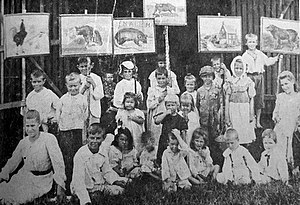
'...the assumption that Anglo-Saxons were inherently superior to Hispano-Indians was as much a part of the colony's creed as teetotalism, a principle which had also been made explicit in the New Australia articles of association, but was now an unwritten law. The racial attitudes the colonists had brought with them from Australia were revealed by some of the facetious advertisements in Evening Notes: 'Boycott the Chinkie and save yourselves from the Yellow Agony by buying your vegetables from white gardener -- John Wilson'; 'Baxter's shoes - Nigger tickler clogs.'… this was not gracious, for on the whole Cosme fared well in its deadlings with the Government of Paraguay.'
Gavin Souter A Peculiar People: The Australians In Paraguay Sydney: Sydney University Press, 1968
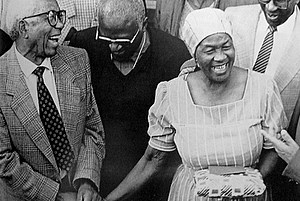
By contrast, the lives of Walter and Albertina Sisulu demonstrated enormous courage and fortitude. The scenes at the Rivonia trial in 1963 were extraordinary, as men like Walter and Mandela were getting ready to spend an indefinite period in Robben Island, and their wives Albertina and Winnie virtual widowhood. At the time, it seemed like the apartheid regime so lacked legitimacy that it was bound to crumble. To think that it would take another thirty years to finally end.
A recent book by their daughter-in-law Elinor artlessly balances dramas on the main political stage with the small domestic scenes that hold life togther. Here's an interesting practice that developed late in the struggle:
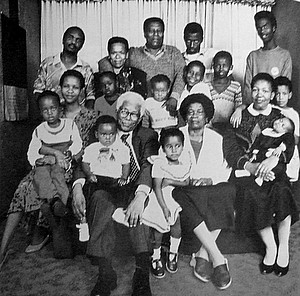
'The Sisulu family observed a 'Black Christmas' at the end of 1985. This was the practice, began after the 1976 uprising, of eschewing the luxuries associated with Christmas and keeping expenditure to a bare minimum. Black South Africans felt that they had nothing to celebrate and saw no reason to swell the coffers of white-owned businesses. By 1985, there was almost a total observation of 'Black Christmas' in black communities around the country. Some white also observed this practice…'
Elinor Sisulu Walter & Albertina Sisulu: In Our Lifetime London: Abacus, 2003 (orig. 2002), p. 430
I realise that this kind of comparison is in danger of being judged an expression of self-loathing typical of liberal elite in Australia. Rather than settling into a fixed position about Australia as a 'white fortress', I prefer to see its history as a challenge for the future. Lane's experiment provides us today with the challenge of establishing a relationship with the Guaraní that he disregarded. It was interesting to meet with Ticio Escobar, the director of Paraguay's Museo del Barro (Museum of Mud), which houses work of the Hispanic-Guaraní Baroque. He had never heard of Nuevo Australia. Here perhaps is an opportunity to restore the conversation, and bring something of the Paraguayan culture to Australia.
The example of South Africa shows that 'our roots aren't our leaves'. The failures of the past point us to the potential successes of the future.
Friday, January 26, 2007
Eat the Bustard!
An article in New Matilda argues that Australians are missing the opportunity to use its own resources -- choosing to farm the American turkey and chicken rather than its own indigenous bustard.
Given the palatability of the bird, why did Australians begin to lose interest in bustards and refocus instead on importing American turkeys - yet another introduced species that could potentially harm Australia? Why didn't they build an industry around sustainably harvesting, and in the process conserving, a valued Australian bird? Our guess is that native foods were increasingly seen as 'poor man's tucker' and as such were gradually removed from Australian cookbooks.
The contrast between the current status of the bustard and the chicken in Australia is stark: the former is struggling to survive and in decline, the latter is the continent's most numerous bird. Indeed, the chicken is now thought to be the world's most numerous bird, all eight billion of them.
Bob Beale and Michael Archer are co-authors of Going Native: Living in the Australian Environment (Hodder Headline)
Bob Beale and Michael Archer 'Sustainability: Eat the Bustard!' New Matilda www.newmatilda.com/home/articledetail.asp?ArticleID=1932&CategoryID (22/11/2006)
Wednesday, January 10, 2007
Pommie Balandas
An article in the UK Telegraph by Richard Madden promotes the Gama Festival for English tourists. He positions it as an event for Balanda:
Garma is Australia's leading cultural exchange event, attended by about 1,200 tribal members from 20 clan groups of the local Yolngu people and about 800 Balanda - non-aboriginal "white fellas" like me.
In particular, he praises the festival as an experience of reconciliation. Yunupingu's position seems similar to the South African value of Ubuntu.
"We will walk side by side with each other, even with our worst enemy," Mandawuy Yunupingu had proclaimed on the first morning of Garma. Five days later, on the final night, as I watched him lead his band Yothu Yindi in front of an ecstatic crowd, it was hard not to become wrapped up in the spirit of optimism and reconciliation that Garma creates.
Sunday, January 07, 2007
Euraustralians Unite
A recently replayed program on ABC Radio National features Xavier Herbert's letter to his publisher 'Inky' Stephenson, when he argues for the rights of the 'Euraustralians', those non-indigenous or half-breed settlers who cannot be called 'real Australians' because they lack Aboriginal identity, but belong here more than the 'pommies'.
Hindsight - 24 September 2006 - In Capricornia Country: the Legend of Xavier Herbert
Saturday, January 06, 2007
Land-Without-Evil
I've just finished Hélène Clastres The Land-Without-Evil (trans. Jacqueline Grenez Brovender) Urbana: University of Illinois Press, 1995 (orig. 1975). As an account of the Guaraní and Tupí cultures, it seems very conceptual, reflecting the Parisian critique of commodification. But there are many very interesting asides that suggest alternative narratives for first contact. It appears that the Guaraní have a belief in the Land-Without-Evil (yvy marä ey), which is a distant place to the east, across vast waters, where humans can achieve immortality. Their history has been marked by prophets (karai) who have led tribes to find this land, always with disastrous consequences. When they encountered Jesuit priests, they found in the Christian story of the hereafter a version of their own utopianism, but kept a convenient distance from this world. They adopted these priests as their new prophets. Well, that's one story.
Monday, January 01, 2007
Being Paraguayan
 I'm reading a few books about the Guaraní in Paraguay. Barbara Ganson's The Guaraní Under Spanish Rule In The Río De La Plata (Stanford, Ca.: Stanford University Press, 2003) is a plainly written book. The subject is fascinating, but her narrative fails to inspire. I am particularly interested in tracing the exchanges between the Jesuits and Guaraní that led to mutual cultural influence. Ganson is mostly dependent on written records, so she tends to extrapolate from the official dialogue of the time (including some canny if quite obsequious Guaraní letters to Spanish rulers). What interests me particularly is the Hispanic-Guaraní Baroque that developed in the Jesuit missions during the 17c and 18c.
What frames all this is on stunning contemporary fact about Paraguay:
I'm reading a few books about the Guaraní in Paraguay. Barbara Ganson's The Guaraní Under Spanish Rule In The Río De La Plata (Stanford, Ca.: Stanford University Press, 2003) is a plainly written book. The subject is fascinating, but her narrative fails to inspire. I am particularly interested in tracing the exchanges between the Jesuits and Guaraní that led to mutual cultural influence. Ganson is mostly dependent on written records, so she tends to extrapolate from the official dialogue of the time (including some canny if quite obsequious Guaraní letters to Spanish rulers). What interests me particularly is the Hispanic-Guaraní Baroque that developed in the Jesuit missions during the 17c and 18c.
What frames all this is on stunning contemporary fact about Paraguay:
According to the 1992 census, 49 percent of the population of Paraguay spoke Guaraní and Spanish, 39.3 percent were monolingual Guaraní speakers, and 6.4 percent spoke only Spanish… Paraguay has the distinction of being the only country in the Western hemisphere where a native language is more widely spoken than a European one…. Today, less than 1-3 percent of the population in Paraguay is considered 'Indian'. (Ganson, 2003, p.185)Imagine that in Australia. With roughly similar proportion of indigenous people in our population, yet was all spoke Aboriginal languages. Perhaps the 'tyranny of distance' was not that we were too far away from Europe, but not isolated enough. More to follow.
Sunday, November 26, 2006
Catch an interesting film
Given the celebration of Rabbit Proof Fence, it seems strange that Philip Noyce's follow up film Catch a Fire seems to have such a low profile. The film is particularly interesting for the portrayal of Nik Vos by Tim Robbins. In one scene, the Boer anti-terrorist expert is shown singing a gentle folk song accompanied by guitar with his young family. The film touches on the anxiety that formed the base to Apartheid, as well as the demoralising effects this had on its victims.

In an inteview for Emanuel Levy, Noyce admits a particular resonance as an Australian working on a film set in South Africa.
For Noyce, the most challenging part of making Catch a Fire was “being a white Australian tackling a South African story that deals with so many events of historical significance to that country. I very quickly began immersing myself in South African culture and history.
And reflecting on his experiences in researching white South Africans:
Talking to those police officers as I did — to many of them, ex-police officers in South Africa — I realized that they all saw themselves as Africans. That was a strange concept to me: How could a white person think of himself as African? And yet many of them lay claim to 300 years or more of continued residency in southern Africa. Some of them said, "Well, I've been here longer than Patrick Chamusso, than his forefathers. I'm African." Others said, "We were fighting a vicious, determined enemy, who was determined to destroy everything that we'd fought to build up here."
Elsewhere, he says...
the South Africans are a beacon to the rest of us; they are the light at the end of the tunnel that we never seem to see an end to - the tunnel of seemingly irresolvable differences between us all
Sunday, November 19, 2006
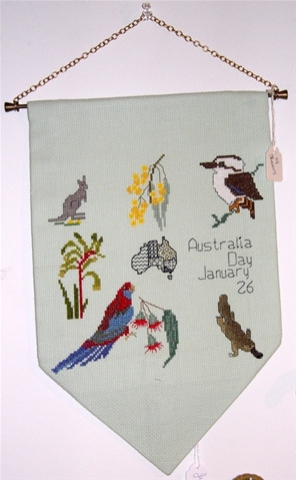
The lost world of Australia
Friday, November 10, 2006
Embrace the night
Imagine the City of Melbourne dedicating one night to darkness. Across the city, street lights are turned off and residents advised to extinguish their house lights. Cars stop. Residents venture onto the street and gaze up to the night sky. Parents explain to their children how the ancient Greeks saw mythological creatures in the sky. Adolescents turn off their phones and see where the Southern Cross is. A magic at hand...
Authorities in the capital Reykjavik will turn off street lights on Thursday evening and people are also being encouraged to sit in their houses in the dark, writer Andri Snaer Magnason said on Wednesday. While the lights are out, an astronomer will describe the night sky over national radio.
Tuesday, October 24, 2006
On the road to elsewhere
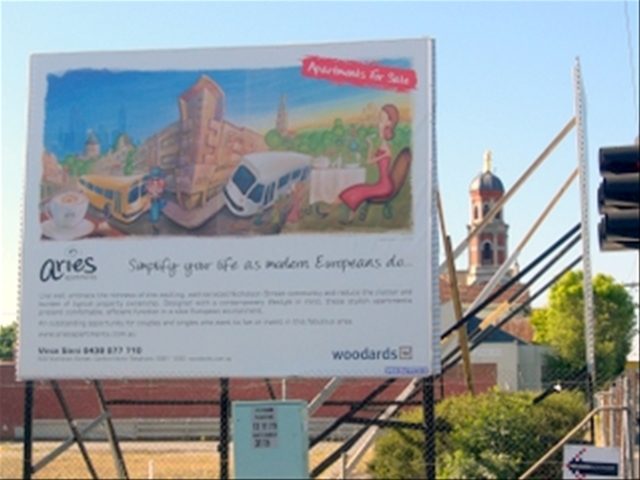
This advertisement sits on the corner of Holden and Nicholson Street, Brunswick, Melbourne. It reads:
Simplify your life as Europeans do... Live well, embrace the richness of the exciting, well-serviced Nicholson Street community and reduce the clutter and burden of typical property ownership. Designed with a contemporary lifestyle in mind, these stylish apartments present comfortable, efficient function in a slick European environment. An oustanding opportunity for couples and singles who want to live or invest in this fabulous area.
An interesting exchange this. While it directs our gaze upwards, to the 'slick' and 'stylish' European manner, it actually resigns us to reduced living space. While higher density might be desirable, is there a way of selling this without having us pretend that we are living at the opposite end of the planet?
Friday, October 20, 2006
Multiculturalism at large in Brunswick
A reliable source informs me of the following scene at a Lebanese restaurant in Brunswick. Tiba's is a notoriously good place to eat, especially during Ramadan, where the food is always fresh and full of flavour. Despite their non-alcohol policy, they attract many non-Muslims from the neighbourhood.
Last night, apparently, a group entered which included a Jewish couple (man in yamulkah and woman in wig) together with a couple of young Muslim woman. They were overheard talking about 'our Jewish brothers and sisters'.
There are growing signs of creeping multiculturalism in our midst. What's happened to the fear and distrust that we have come to rely on?
What will be next? Sorry?
Saturday, August 26, 2006
Looking towards a medieval Australia
Cultural Translations: Remaking the Early European Past in Australasia
Sponsored by the Network for Early European Research
2-3 November, 2006
State Library of Victoria, Melbourne
Convenors: Dr Peter Holbrook (University of Queensland) and Professor Stephanie Trigg (University of Melbourne)The Cultural Translations symposium will for the first of its kind: an attempt to think through, across a range of disciplines, the nature of Australasian encounters and engagements with the medieval and early modern British and European pasts.
The symposium has two broad themes. The first relates to the issue of British and European cultural memory in Australasia. What roles have the cultural, aesthetic, literary, legal, constitutional, political-ideological, religious and social discourses and practices of medieval and early modern Britain and Europe played in the settler-colonial societies of Australia and New Zealand? What has been the relation of these societies to the medieval and early European past? what uses have nationalist discourses in these societies found, or failed to find, in medieval and early modern cultural moments? What have been the broader cultural politics of remembering in a multicultural, postcolonial, and globalized twenty-first century Australasia?
A second theme is in some ways more empirical and concerns scholarship, or how the early European past has in practice been reconstructed by scholars and intellectuals in Australia and New Zealand. What precise contributions to the study and interpretation of these key phases in the history of Western civilization have been made by scholarship in Australia and New Zealand? Have there been particular distinguishing characteristics of Australasian scholarship-in any field-on these civilizational moments? What function has the study of Medieval, Renaissance, or Enlightenment cultural and intellectual modes and movements played in the political, social, and cultural life of Australasia? What role have particular scholars, institutions (schools, universities, museums, churches, parliaments), or practices (antiquarianism, collecting, editing and bibliography, curatorship) devoted to the British or European medieval or early modern played in Australia or New Zealand?
All welcome.
Invited speakers include:
Geraldine Barnes (University of Sydney)
Tom Bishop (University of Auckland)
Glenn Burgess (University of Hull)
Conal Condren (University of New South Wales)
Leigh Dale (University of Queensland)
Robert Dixon (University of Queensland)
Louise D'Arcens (University of Wollongong)
John Frow (University of Melbourne)
John Gascoigne (University of New South Wales)
Ian Hunter (University of Queensland)
Andrew Lynch (University of Western Australia)
The combined expertise of this group ranges across such fields as English Literature, Political and Intellectual History, the History of Art, Cultural Studies, Australian Studies, and Postcolonial Studies. In regards to historical reach, its expertise ranges from the medieval period to the Eighteenth Century, and to the history of Australasia. We think it particularly exciting that the symposium will provide an opportunity for members of such a variety of disciplines to talk to each other about the meaning of the European past in Australasia.
Detailed abstracts of the papers will be available on the symposium Web site by the beginning of September. If you would like to be part of the programme as a formal respondent, please let us know.
NEER will provide financial assistance to postgraduate students and early career researchers wishing to attend this symposium.
For any inquiries, please contact the Cultural Translations Administrative Assistant, Helen Hickey University of Melbourne (T: +61 3 8344 5506, F: +61 3 8344 5494, E: h.hickey@pgrad.unimelb.edu.au)
http://www.english.unimelb.edu.au/FrontPageDoc/CulturalTranslations.html/
Saturday, August 19, 2006
Alex Buzo dies
 Australian-Albanian author Alex Buzo passed away this week. Here's a brief extract from Neverland and makes reference to his views.
Alex Buzo’s Norm and Akif
The sudden reversal from warm hospitality to cold expulsion evokes a fear of difference that seems buried deep in the Australian psyche. Akif’s own plight had been anticipated in dramatic form by Alex Buzo, who is Australia’s most prominent person of Albanian stock. Buzo’s father was born in the ancient Albanian town of Berat in 1912 and was educated in American schools before arriving in Australia in the 1930s. The name ‘Buzo’ means ‘diver’ in Spanish. Alex Buzo’s mother was of Irish descent.
Buzo’s first play, Norm and Ahmed (1968), anticipated the denouement of the Kosovar’s Australian reception. A construction worker asks for a light from a passing Pakistani student. The ocker host tries to loosen up this deferential visitor and introduce him to Australian ways, but he is intimidated by the student’s formal way of speaking. With almost sadistic pleasure, Buzo lures the audience into thinking that there is some real rapprochement occurring. This is swiftly undermined in the final moment of the play, where Norm dispatches the Pakistani with the epitaph ‘fuckin’ boong’.
The play was recently revised as Normie and Tuon (1999); the foreigner has become a Vietnamese, who confronts a war veteran. Buzo compares the friendly/hostile switch to the Kosovar story: ‘The big thing in the Kosovar case was the lack of perceived gratitude.’ Despite the parallel theme, and his Albanian ancestry, Alex Buzo has never been called on to speak about the Kosovar refugees. He is better known as an expert on the peculiarities of Australian culture, with publications such as Real Men Don't Eat Quiche and A Dictionary of the Almost Obvious. In this respect, Buzo is a prime candidate for the position of ‘Albanian for the other’. With gentle mockery, he documents the idiosyncrasies of Australian culture.
Buzo is a proud nationalist; his 1972 play Macquarie passionately upholds the reputation of Governor Macquarie above the mean-spirited policies of Samuel Marsden. Yet at the same time, there is a fatalism running through Buzo’s writing about the possibility of reconciliation between Aussie and foreigner. His pessimism remains a challenge to the bright-eyed parade of Aussie icons that stands for national pride.
(Image to the left is the cover of the Herald Sun when Victoria opened its hearts to the Kosovar refugees. The first, and perhaps only, time that the tabloid has sported a headline in Albanian.}
Australian-Albanian author Alex Buzo passed away this week. Here's a brief extract from Neverland and makes reference to his views.
Alex Buzo’s Norm and Akif
The sudden reversal from warm hospitality to cold expulsion evokes a fear of difference that seems buried deep in the Australian psyche. Akif’s own plight had been anticipated in dramatic form by Alex Buzo, who is Australia’s most prominent person of Albanian stock. Buzo’s father was born in the ancient Albanian town of Berat in 1912 and was educated in American schools before arriving in Australia in the 1930s. The name ‘Buzo’ means ‘diver’ in Spanish. Alex Buzo’s mother was of Irish descent.
Buzo’s first play, Norm and Ahmed (1968), anticipated the denouement of the Kosovar’s Australian reception. A construction worker asks for a light from a passing Pakistani student. The ocker host tries to loosen up this deferential visitor and introduce him to Australian ways, but he is intimidated by the student’s formal way of speaking. With almost sadistic pleasure, Buzo lures the audience into thinking that there is some real rapprochement occurring. This is swiftly undermined in the final moment of the play, where Norm dispatches the Pakistani with the epitaph ‘fuckin’ boong’.
The play was recently revised as Normie and Tuon (1999); the foreigner has become a Vietnamese, who confronts a war veteran. Buzo compares the friendly/hostile switch to the Kosovar story: ‘The big thing in the Kosovar case was the lack of perceived gratitude.’ Despite the parallel theme, and his Albanian ancestry, Alex Buzo has never been called on to speak about the Kosovar refugees. He is better known as an expert on the peculiarities of Australian culture, with publications such as Real Men Don't Eat Quiche and A Dictionary of the Almost Obvious. In this respect, Buzo is a prime candidate for the position of ‘Albanian for the other’. With gentle mockery, he documents the idiosyncrasies of Australian culture.
Buzo is a proud nationalist; his 1972 play Macquarie passionately upholds the reputation of Governor Macquarie above the mean-spirited policies of Samuel Marsden. Yet at the same time, there is a fatalism running through Buzo’s writing about the possibility of reconciliation between Aussie and foreigner. His pessimism remains a challenge to the bright-eyed parade of Aussie icons that stands for national pride.
(Image to the left is the cover of the Herald Sun when Victoria opened its hearts to the Kosovar refugees. The first, and perhaps only, time that the tabloid has sported a headline in Albanian.} 
Saturday, July 01, 2006
Woven opening
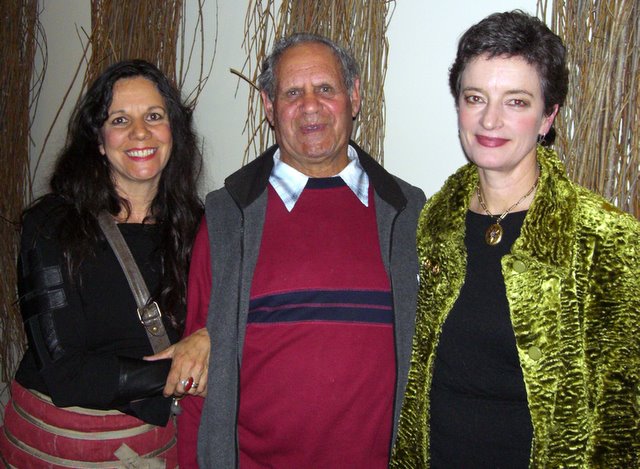 Opening of Woven by Gayle Maddigan and Megan Evans at Ballarat Fine Art Gallery 30 June 2006
This exhibition is a wonderful meeting of opposites—the outside of public art and the inside of the art gallery, the ground on which we stand as individuals and the stars that bring us together, the fifth generation Australian artist, and an artist whose people have been here for thousands of generations. Interesting things happen when you bring these opposites together.
We normally understand the earth as the land we travel, and the stars as lights that guide our journey. But a little over fourteen years ago, Australia was blessed by a different knowledge. In the ground-breaking Mabo case (literally), the Australian High Court decided in favour of the people of Mer, the Meriam people, who followed the teachings of the ancestor Malo, which assigned rules of land tenure, succession and trespass. Witnesses such as Koiki Mabo for the Mer invoked the allegorical expression ‘Stars follow their own path . . .’ when giving their testimony. History may prescribe certain twists and turns in the fate of mankind, but the underlying rules of culture remain constant, just as stars follow their own path.
Of course, this evening we are following the path of the southern cross. In fact, I came here from the newly renamed Southern Cross Station, launched by the Ballarat-born Premier Steve Bracks as a symbol of multiculturalism. We saw the ongoing energy of that symbol on Wednesday at the Workers Rights Rally, when United Firefighters Union of Australia state secretary Peter Marshall, a rally organiser, urged the crowd to repeat rebellion leader Peter Lalor’s oath: ‘We swear by the Southern Cross to stand truly by each other and fight to defend our rights and liberties.’
So ingrained is the Southern Cross symbol in our sense of what is worth fighting for, that we can be excused for forgetting that the stars belong to no one story. They are a bridge between cultures.
One of the wonders of the South Project is finding such links between countries that have been separated by the very thing they share in common. Like the flightless birds that grace our lands, countries like Australia and Brazil are so used to looking north that we don’t see each other. We only need to look up to the stars.
This fact is very much in our face at the moment as we see the Brazilian flag proudly waved at the World Cup. The flag features the night sky above Rio as it was on 10:30am 15 November 1889. We can find the southern cross in the flags of New Guinea, New Zealand, Samoa...
But my favourite story of the Southern Cross originates right here. As recorded by the grazier William Stanbridge, to the Philosophical Institute in Melbourne in 1857, the Boorong people see in the southern constellation a tree which protects Bunya, an opossum, who is pursued by Tchingal, an emu, represented by the Coal Sack. The Pointers are the two great hunters who kill the emu and their spears are stuck in the tree.
A common feature of various Aboriginal stories of the stars is a tree that enables its heroes to move between heaven and earth. The connection between trees and the stars they point to is quite powerful in this exhibition. The artists have approached the link from many different angles. Gayle Maddigan has used the ash from the burnt branches to create quite visceral drawings on paper. Megan Evens has adopted a more craft-life approach in her meticulous oil paintings of gigantic leaves. Together they have produced an amazingly powerful white ochre landscape painted directly on the gallery wall opposite the Eureka flag. Woven is a wonderful journey that takes us back through the trauma of invasion to the timeless values of indigenous Australia. Here is a path for stars, and for us to guide our way to the future.
I would like to conclude with four lines from Dante’s Divine Comedy, when we finally meets his beloved Beatrice:
[Canto XXXIII] From that most holy wave I now returned
to Beatrice; remade, as new trees are
renewed when they bring forth new boughs, I was
pure and prepared to climb into the stars
Alighieri Dante The Divine Comedy (trans. Eugenio Montale) : Everyman Books, 1985 (orig. 1313), p. 375
Image of Gayle Maddigan, elder Murray Harrison and Megan Evans
Opening of Woven by Gayle Maddigan and Megan Evans at Ballarat Fine Art Gallery 30 June 2006
This exhibition is a wonderful meeting of opposites—the outside of public art and the inside of the art gallery, the ground on which we stand as individuals and the stars that bring us together, the fifth generation Australian artist, and an artist whose people have been here for thousands of generations. Interesting things happen when you bring these opposites together.
We normally understand the earth as the land we travel, and the stars as lights that guide our journey. But a little over fourteen years ago, Australia was blessed by a different knowledge. In the ground-breaking Mabo case (literally), the Australian High Court decided in favour of the people of Mer, the Meriam people, who followed the teachings of the ancestor Malo, which assigned rules of land tenure, succession and trespass. Witnesses such as Koiki Mabo for the Mer invoked the allegorical expression ‘Stars follow their own path . . .’ when giving their testimony. History may prescribe certain twists and turns in the fate of mankind, but the underlying rules of culture remain constant, just as stars follow their own path.
Of course, this evening we are following the path of the southern cross. In fact, I came here from the newly renamed Southern Cross Station, launched by the Ballarat-born Premier Steve Bracks as a symbol of multiculturalism. We saw the ongoing energy of that symbol on Wednesday at the Workers Rights Rally, when United Firefighters Union of Australia state secretary Peter Marshall, a rally organiser, urged the crowd to repeat rebellion leader Peter Lalor’s oath: ‘We swear by the Southern Cross to stand truly by each other and fight to defend our rights and liberties.’
So ingrained is the Southern Cross symbol in our sense of what is worth fighting for, that we can be excused for forgetting that the stars belong to no one story. They are a bridge between cultures.
One of the wonders of the South Project is finding such links between countries that have been separated by the very thing they share in common. Like the flightless birds that grace our lands, countries like Australia and Brazil are so used to looking north that we don’t see each other. We only need to look up to the stars.
This fact is very much in our face at the moment as we see the Brazilian flag proudly waved at the World Cup. The flag features the night sky above Rio as it was on 10:30am 15 November 1889. We can find the southern cross in the flags of New Guinea, New Zealand, Samoa...
But my favourite story of the Southern Cross originates right here. As recorded by the grazier William Stanbridge, to the Philosophical Institute in Melbourne in 1857, the Boorong people see in the southern constellation a tree which protects Bunya, an opossum, who is pursued by Tchingal, an emu, represented by the Coal Sack. The Pointers are the two great hunters who kill the emu and their spears are stuck in the tree.
A common feature of various Aboriginal stories of the stars is a tree that enables its heroes to move between heaven and earth. The connection between trees and the stars they point to is quite powerful in this exhibition. The artists have approached the link from many different angles. Gayle Maddigan has used the ash from the burnt branches to create quite visceral drawings on paper. Megan Evens has adopted a more craft-life approach in her meticulous oil paintings of gigantic leaves. Together they have produced an amazingly powerful white ochre landscape painted directly on the gallery wall opposite the Eureka flag. Woven is a wonderful journey that takes us back through the trauma of invasion to the timeless values of indigenous Australia. Here is a path for stars, and for us to guide our way to the future.
I would like to conclude with four lines from Dante’s Divine Comedy, when we finally meets his beloved Beatrice:
[Canto XXXIII] From that most holy wave I now returned
to Beatrice; remade, as new trees are
renewed when they bring forth new boughs, I was
pure and prepared to climb into the stars
Alighieri Dante The Divine Comedy (trans. Eugenio Montale) : Everyman Books, 1985 (orig. 1313), p. 375
Image of Gayle Maddigan, elder Murray Harrison and Megan Evans
Sunday, April 30, 2006
Martin Flanagan on South Africa
From Martin Flanagan's Age article, Straight shooting:
I don't know if I could live in South Africa. You'd need strong nerves. But I do know there is something in what Max du Preez said at the end of his book. South Africa has problems far greater than this country's, but in South Africa you keep coming across a great invigorating passion for the future that is unlike anything here. We equate nationalism with beating the drum on Anzac Day and playing up sporting wins. They have people like the little man who took us through Soweto.
I don't know if I could live in South Africa. You'd need strong nerves. But I do know there is something in what Max du Preez said at the end of his book. South Africa has problems far greater than this country's, but in South Africa you keep coming across a great invigorating passion for the future that is unlike anything here. We equate nationalism with beating the drum on Anzac Day and playing up sporting wins. They have people like the little man who took us through Soweto.
Sunday, April 23, 2006
Ngapartji Ngapartji
Ngapartji Ngapartji a course/performance on the Pitjantjatjara language is know calling for pparticipants.
awelye
From article about Cassandra Fahey:
During a leisurely drive to the Healesville Sanctuary to see the seductively named platypusary, Fahey's musings on work, life, love and spirituality suggest someone who is instinctive, uninhibited and inspired by the big, hazy picture. She cites nature and the work and thoughts of Aboriginal painter Emily Kame Kngwarreye among her key influences.
"When badgered by white people, collectors and so forth to name her works, (Emily) always said awelye, and she said that meant 'the whole bang lot' . . . and this is beautiful," Fahey says, with a certain longing. "This is such an incredibly positive thing that Australian Aboriginality has that we just struggle to get."
Talking architecture and life with Fahey is a little like getting "the whole bang lot".
Subscribe to:
Posts (Atom)